The 2025 ASEAN Summit In his opening remarks at the 46th ASEAN Summit (Kuala Lumpur- 26-27 May) Malaysian Prime Minister Anwar Ibrahim, the current ASEAN chair, announced that he had written to President Trump, formally requesting a special USA-ASEAN summit[1] to negotiate the new tariff regime on behalf of all ASEAN member states. He...Read More
The quota system introduced by Sheikh Mujibur Rahman for freedom fighters in 1972 has once again been thrust into the spotlight. Like a social-timebomb, the anti-quota protests organised by the Anti-Discrimination Students’ Movement ousted Sheikh Hasina’s regime, granting Bangladesh its ‘second independence’. The historic events of 5 August 2024 were the culmination of the ever-growing...Read More
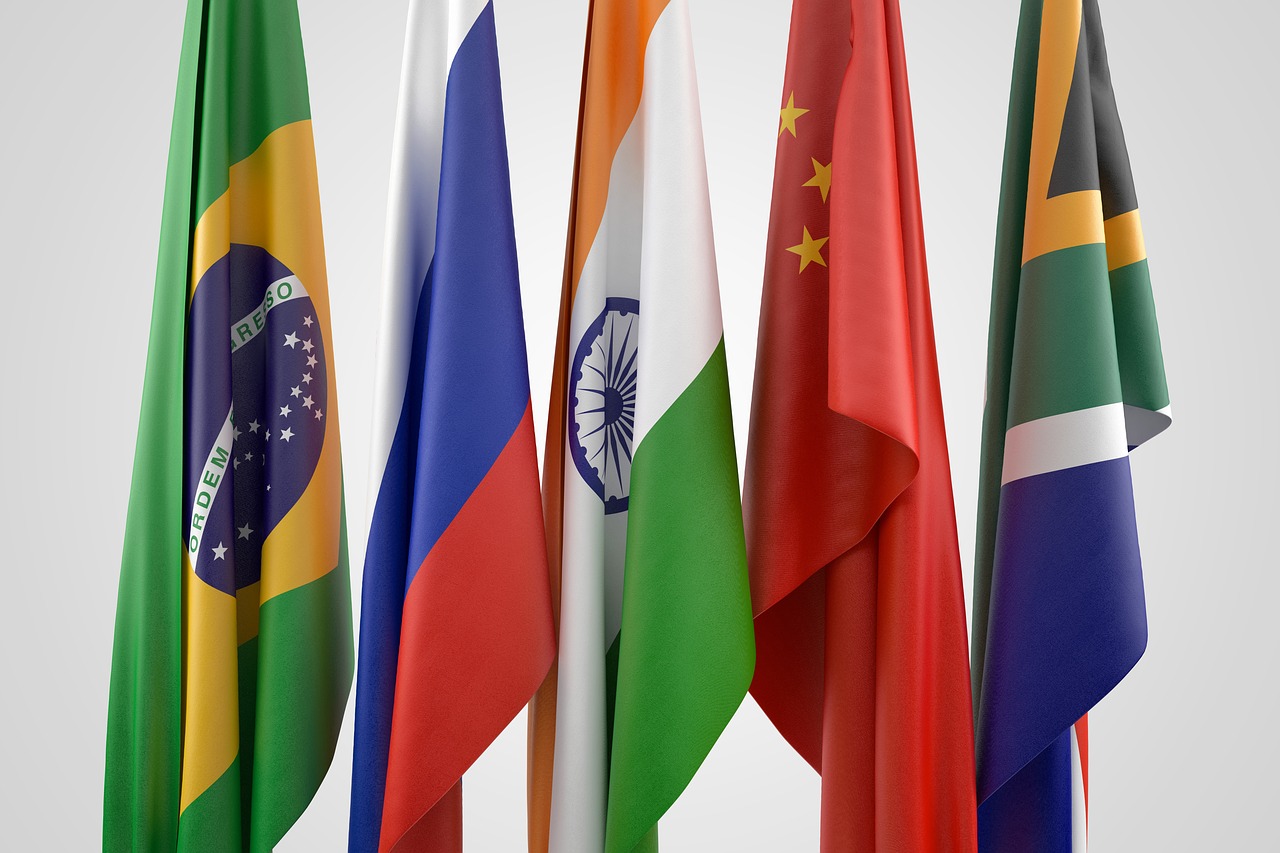
The GPI Report on the BRICS 2023 meeting, held in South Africa, indicated gradual progress in the institutional and policy development of the organization and interest is joining the organization from several countries, beyond the five founding members indicated in the acronym. This paper is structured similarly to the 2023 GPI BRICS report to facilitate...Read More
From 8.00 on 1 August Thai citizens with smartphones (58m.) can register for the 10,000-baht (US$280) digital wallet handout through the Thang Raj App (Government Way – see below). The wallet – worth about 2/3 of the average national nation income – is available to Thais age 16 or older with incomes under US$23,000 and...Read More
Bangladesh has existed for 53 years, and of these, 34 years have been under ‘democratic rule’. On 7 January 2024, the country had its 12th parliamentary elections which were described as “controversial”. With the main opposition not taking part in the elections, is the country heading towards a one-party state? Bangladesh has a long legacy...Read More
Online freedom of expression has been criminalised by the government of Bangladesh through its controversial Digital Security Act (DSA) 2018, and this has continued with its replacement – the Cyber Security Act (CSA). Through legal methods, the Act enables the government to eradicate critical thinking and dissent even though it is a right enshrined in...Read More
The economic turbulence that Bangladesh is currently going through has caused a rapid increase in food and energy prices. This has affected low and middle-income families who spend a large share of their income on food. With huge uncertainties, how will Bangladesh cope with the global supply-side shocks? Over the last few years Bangladesh has...Read More
Several Southeast Asian leaders were feted by Russian President Vladimir Putin at last week’s Belt and Road Forum in Beijing as part of his pivot to Asia, elevating the importance of the region’s political centrality and economic vitality to Russia’s Indo-Pacific strategy. This was Putin’s second official foreign trip since the International Criminal Court issued an...Read More
The European Union’s call to investigate Beijing’s use of state subsidies in the production of Chinese electric vehicles, along with the possibility of tariffs on EV exports to Europe, comes as Chinese carmakers diversify their manufacturing of EVs into Southeast Asia. Chief among Chinese EV makers’ prospective hubs is Thailand. The country has by far the largest automobile...Read More
What the USA has labelled the Indo-Pacific (I-P) has become a central arena in the USA’s conflict with China. A conflict that has rapidly developed over the last 5 years from a trade dispute to a broad and increasingly ideologically based attempt to counter and constrain China at all levels. This is seen by the...Read More
The Global Policy Institute is a research institute on international affairs. It is based in the City of London, and draws on both a rich pool of international thinkers, academics as well as policy and business professionals. The Institute gives non-partisan guidance to policymakers and decision takers in business, government, and NGOs.